
ONE-CLICK & SCHEDULED PAYMENTS
Keep in mind!
Payment Process
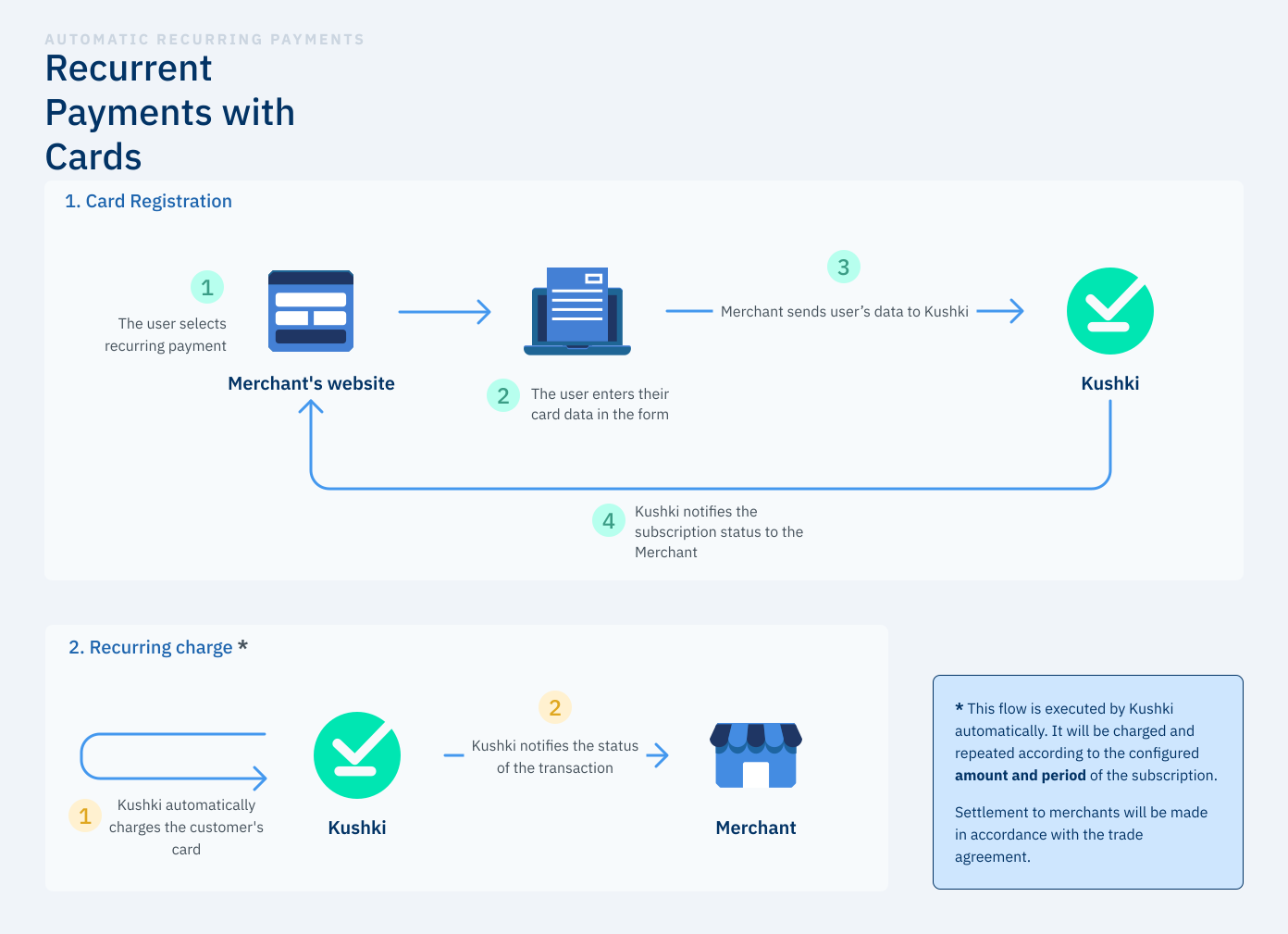
Recurring payment flow
Stage 1 — Credit or Debit Card Registration
Select a Payment Method
In your website or app, the user selects the payment method. Make sure it is clear to the payer that their credit or debit card will be registered for recurring charges.
Provide Card Data
The user provides their card details. Your website or app should verify that the card information is correct — for example, that the expiration date is not outdated, or that the card number passes Luhn's algorithm.
Note: At this stage it cannot yet be confirmed that the card is valid.
Submit Data to Kushki
Kushki receives the data and verifies whether there are enough funds by running a charge for subscription validation. This small fee is charged by Kushki and is automatically reversed if successful. It ensures that the client's card can be charged after registration.
Subscription Notification
Kushki informs you about the result of the card registration so you can display it to the user on screen.
Stage 2 — Recurring Payment
Payment Execution
Kushki processes recurring charges to the registered card automatically. Payments are executed and repeated according to the amount and period defined in the subscription.The billing logic runs every day from 6 AM GMT-5. Make sure the subscription is created before this time if you want the first payment on the same day of registration. When creating a subscription, you must set the Retry logic If a payment is rejected, Kushki retries the charge automatically. By default, there are 3 retries over 3 consecutive days starting from the original You can customize the retry logic using the If the last charge attempt is declined, Kushki may notify you via Webhook. In this case, we recommend contacting the cardholder and offering alternatives — for example, updating the registered card or requesting a one-time One-click payment. Kushki will continue executing automatic charges for the following periods.
startDate field.startDate. For example, for a monthly subscription with startDate: 10-01-2021 and a rejection on 10-02-2021, payment will be retried until 13-02-2021 — 3 times per day, for a total of 9 attempts.retryConfiguration object:scheduled — Interval-based
fixed — Specific days
Retries every N days. The example below retries 3 times per day, every 2 days, for the entire month.
{
  "retryConfiguration": {
    "retryType": "scheduled",
    "value": [2]
  }
}Transaction Status Notification
You will be notified of the status of each automatic charge via Webhook notifications exposed by your system. You can also verify transactions, their details, and status directly in the Kushki Console.
Using the API
Public-Merchant-Id and a Private-Merchant-Id.🟢 Production
🧪 Sandbox (UAT)
https://api.kushkipagos.com/Available Endpoints
Add a Temporary Charge or Discount
Apply a one-time extra charge or discount to the next billing cycle.Deferred Payments in Subscriptions
Acquirer model
Aggregator model
Send the Common
deferred object with creditType, graceMonths, and months inside the charge request:{
"deferred": {
"creditType": "01",
"graceMonths": "00",
"months": 3
}
}creditType values for Colombia:| Code | Description |
|---|---|
01 | Cuotas — Standard installments |
02 | Cuotas con período de gracia — Installments with grace period |
Subscription Pre-Authorization Flow
Product in beta version 🔐👨💻
Pre-authorize
Call Subscription Pre-Authorization (The authorization will expire after 28 days for credit cards and after 7 days for debit cards from the time of the request.
POST /subscriptions/v1/card/{subscriptionId}/preAuthorization). The bank reserves the amount on the customer's card.Capture
Call Subscription Capture (
POST /subscriptions/v1/card/{subscriptionId}/capture) with the ticketNumber from the pre-authorization response to collect the reserved funds.Idempotency
How It Works
Idempotency-Key header with a unique value when calling a supported endpoint.4XX / 5XX), no record is stored and the client can retry with the same key.Header
Rules
| Rule | Detail |
|---|---|
| Validity window | 24 hours. After this, the same key generates a new transaction. |
| Maximum length | 56 characters |
| Uniqueness | Must be unique per transaction type |
| Recommended format | UUIDv4 or equivalent high-entropy random string |
Supported Endpoints
Idempotency-Key header is currently supported in:Error Scenarios
5XX — Server Errors
4XX — Client Errors
No idempotency record is stored. The client may retry with the same
Idempotency-Key. Retrying is at the integrator's discretion.Best Practices
Idempotency-Key for each unique transaction attempt.Got a suggestion on this documentation? Contact us.
Modified at 2026-07-11 00:06:47