1. Online Payments
  • Developer Docs Ecuador 🇪🇨
  • Online Payments
    • Release Notes
    • Card Payments
      • Request a card token
      • Make a charge or deferred charge
      • Refund a transaction
      • Void a transaction
      • Request deferred options
      • Validate OTP
      • Bin Info V2
      • Bin Info
    • One Click and Scheduled Payments
      • Request a recurring charge token
      • Create a recurring charge
      • Update recurring charge card data
      • Make an One-click payment
      • Cancel a recurring charge
      • Update a recurring charge
      • Add a temporary charge or discount
      • Get recurring charge Info
    • Chargebacks
      • Query chargebacks
      • Request chargeback export
    • Subscription Transactions
      • Get subscription transactions
    • Transfer in
      • Request a Transfer In token
      • Init Transaction
      • Get Status
    • Cash in
      • Request a cash in token
      • Init Transaction
      • Update a cash in transaction
      • Transaction Status
      • Delete a cash in transaction
    • Smartlinks
      • Create a Smartlink
      • Update a Smartlink
      • Get a Smartlink
      • Delete a smartlink
    • Analytics
      • Get transactions list v1
      • Get transactions list v2
    • Status
      • Get gateway status
      • Get platform status
    • Commissions
      • Get Commission Configuration
    • Payment Credentials
      • Create a credential
      • Search credentials
      • Activate or deactivate
      • Delete credential
      • Update credential
      • Regenerate a credential
      • Advanced search
    • Payment Button
      • Create a payment button
    • Settlement
      • Query settlement
  • Appian - Submerchant Register
    • Submerchant Validation in Batch
    • Query submerchant status by requestId/submerchantId
    • Get submerchantIds
    • Get credentials for submerchants
  • Schemas
    • threeDomainSecure
    • webhooks
    • Card-old
    • Channel
    • Amount-cash-in
    • ChargebackListResponse
    • StatusComponent
    • SettlementDateRangeRequest
    • SubscriptionTransactionsResponse
    • Card
    • currency
    • networkToken
    • ChargebackItem
    • ErrorResponse
    • SettlementTicketRequest
    • SubscriptionTransaction
    • Subscription
    • Amount
    • ErrorResponse400
    • SettlementResponse
    • extraTaxes
    • Country
    • ErrorResponse401
    • SettlementRecord
    • Language
    • Deferred
    • ErrorResponse403
    • Metadata
    • payment_method
    • ErrorResponse500
    • ContactDetails
    • documentType
    • orderDetails
    • Shipping Address
    • Billing-Address
    • payment_submethod
    • SubscriptionUpdate
    • product
    • SubscriptionAdjustmentRequest
    • threeDomainSecure
    • webhooks
    • headers
    • webhooksChargeback
    • citMit
    • network
    • binInfo
    • messageFields
    • UnexpectedErrorResponse
    • ExternalReferenceId
    • transactionType
BienvenidaPerú 🇵🇪México 🇲🇽Ecuador 🇪🇨
Colombia 🇨🇴Chile 🇨🇱
BienvenidaPerú 🇵🇪México 🇲🇽Ecuador 🇪🇨
Colombia 🇨🇴Chile 🇨🇱
  1. Online Payments

One Click and Scheduled Payments

Discover a bit more about the recurring payment process.
Credit cards have global coverage and are one of the most popular ways to pay online. There are different types of cards and several steps in the process. Learn how it works, the parties involved, and the stages of a subscription payment.
Keep in mind!
Due to our risk policies, the available payment methods and the integration type may vary once you complete the affiliation. We will tell you how to proceed if this process applies to your merchant.
This service is also known as Tokenization and recurrent charge execution.

Payment Process#

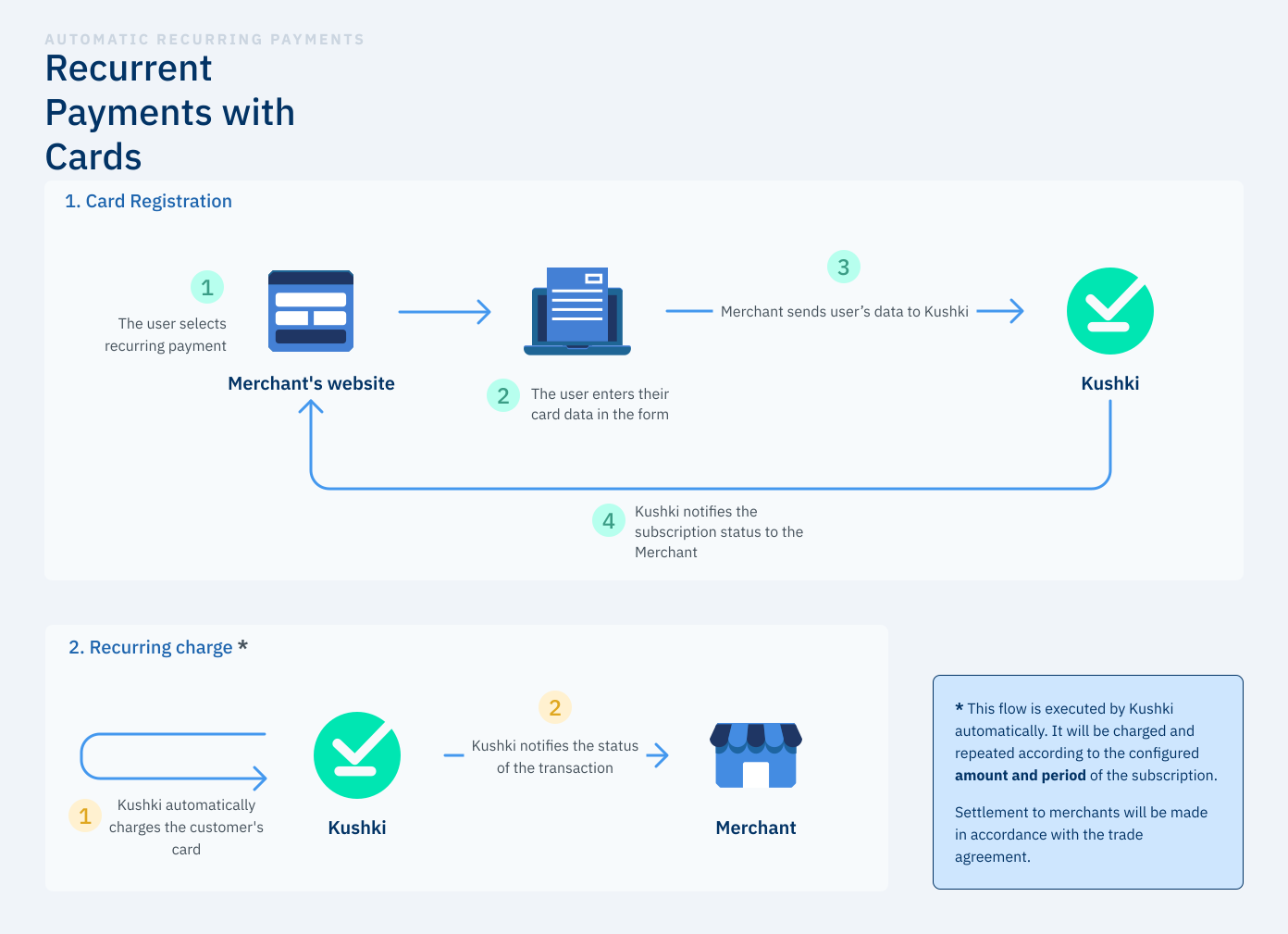
A credit card payment for a subscription is made in 2 main stages: card registration and recurring charge execution.
Recurring payment flow

Stage 1 — Credit or Debit Card Registration#

Select a Payment Method
In your website or app, the user selects the payment method. Make sure it is clear to the payer that their credit or debit card will be registered for recurring charges.
Provide Card Data
The user provides their card details. Your website or app should verify that the card information is correct — for example, that the expiration date is not outdated, or that the card number passes Luhn's algorithm.
Note: At this stage it cannot yet be confirmed that the card is valid.
Submit Data to Kushki
Kushki receives the data and verifies whether there are enough funds by running a charge for subscription validation. This small fee is charged by Kushki and is automatically reversed if successful. It ensures that the client's card can be charged after registration.
Subscription Notification
Kushki informs you about the result of the card registration so you can display it to the user on screen.

Stage 2 — Recurring Payment#

Payment Execution
Kushki processes recurring charges to the registered card automatically. Payments are executed and repeated according to the amount and period defined in the subscription.
The billing logic runs every day from 6 AM GMT-5. Make sure the subscription is created before this time if you want the first payment on the same day of registration. When creating a subscription, you must set the startDate field.
Retry logic
If a payment is rejected, Kushki retries the charge automatically. By default, there are 3 retries over 3 consecutive days starting from the original startDate. For example, for a monthly subscription with startDate: 10-01-2021 and a rejection on 10-02-2021, payment will be retried until 13-02-2021 — 3 times per day, for a total of 9 attempts.
You can customize the retry logic using the retryConfiguration object:
scheduled — Interval-based
fixed — Specific days
Retries every N days. The example below retries 3 times per day, every 2 days, for the entire month.
{
  "retryConfiguration": {
    "retryType": "scheduled",
    "value": [2]
  }
}
If the last charge attempt is declined, Kushki may notify you via Webhook. In this case, we recommend contacting the cardholder and offering alternatives — for example, updating the registered card or requesting a one-time One-click payment. Kushki will continue executing automatic charges for the following periods.
Transaction Status Notification
You will be notified of the status of each automatic charge via Webhook notifications exposed by your system. You can also verify transactions, their details, and status directly in the Kushki Console.

Using the API#

To use the API, you must request your Kushki Sandbox credentials, composed of a Public-Merchant-Id and a Private-Merchant-Id.
🟢 Production
🧪 Sandbox (UAT)
https://api.kushkipagos.com/

Available Endpoints#

Request a Recurring Charge Token
Tokenize card data to register it for recurring charges.
Create a Recurring Charge
Create a new subscription with the registered card token.
Make an One-Click Payment
Execute a single on-demand charge against a registered card.
Get Recurring Charge Info
Retrieve the details and current status of a subscription.
Update Recurring Charge Card Data
Replace the card associated with an active subscription.
Update a Recurring Charge
Modify the amount, frequency, or dates of an existing subscription.
Add a Temporary Charge or Discount
Apply a one-time extra charge or discount to the next billing cycle.
Cancel a Recurring Charge
Cancel and deactivate an active subscription.

Idempotency#

🔁
Kushki's API supports idempotent requests to safely retry operations without the risk of executing the same transaction twice. This is especially useful when network issues, timeouts, or client retries might otherwise create duplicate records.

How It Works#

To perform an idempotent request, include the Idempotency-Key header with a unique value when calling a supported endpoint.
Kushki stores the response only if the original request succeeds.
If the same key is sent again within the validity window, the same successful response is returned.
If the original request failed (4XX / 5XX), no record is stored and the client can retry with the same key.

Header#

Rules#

RuleDetail
Validity window24 hours. After this, the same key generates a new transaction.
Maximum length56 characters
UniquenessMust be unique per transaction type
Recommended formatUUIDv4 or equivalent high-entropy random string

Supported Endpoints#

The Idempotency-Key header is currently supported in:
Void a transaction — one-time charges, preauthorizations, and subscription charges.
Refund a transaction — one-time charges, preauthorizations, and subscription charges.
Subscription preauthorizations.

Error Scenarios#

5XX — Server Errors
4XX — Client Errors
No idempotency record is stored. The client may retry with the same Idempotency-Key. Retrying is at the integrator's discretion.

Best Practices#

Always generate a new Idempotency-Key for each unique transaction attempt.
Use UUIDv4 or another strong random string generator to ensure uniqueness.

Got a suggestion on this documentation? Contact us.
Modified at 2026-07-11 00:06:46
Previous
Bin Info
Next
Request a recurring charge token
Built with